Trinity Church
The main attraction of Yelsk and the entire region is the Trinity Church, which dates back to the 1770s. A century later, it underwent a major restructuring. As a result, this wooden temple, which is considered a monument of folk architecture, harmoniously combines the features of the late Baroque and retrospective Russian style in its appearance.
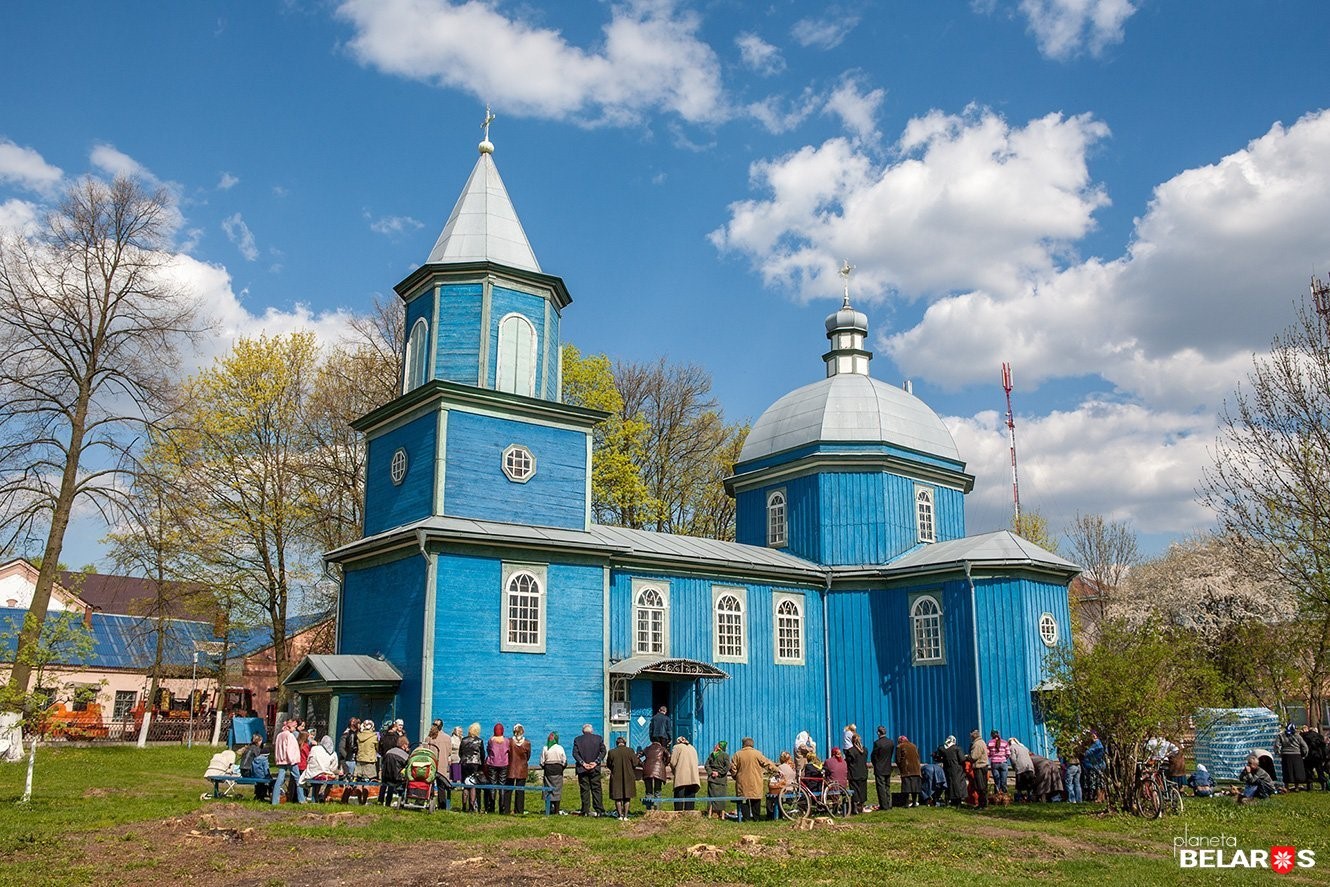
According to legend, in 1757 Ivan Didko, a peasant from the village of Meleshkovichi, lost his oxen. He searched for them for a long time until he came to a small wooded hill ("Vaskovka Island"). Here, on a pear tree, he saw in an extraordinary radiance the icon of the Mother of God, and next to him - his missing oxen. On the site of the miraculous appearance of the icons, first a chapel was built, and then a wooden Vaskovskaya church.
Soon after the appearance of the icon, miracles began to happen near it. The news of this quickly spread throughout the district, and both Orthodox and Catholics began to flock to the icon. From 1773 to 1787, the miracles performed after prayer before the Vaskovskaya icon were described in Polish in a handwritten book kept in the parish church of the village of Meleshkovichi, to which the Vaskovskaya church was assigned. The icon remained in the Vaskovsky church until 1817, when, at the request of the Minsk governor Kazimir Sulistrovsky, it was transferred to the Trinity Church in Yelsk.
Today, the spruce church of the Holy Life-Giving Trinity, built in the 1770s by the local landowner Kazimir Oskerko, has the status of historical and cultural value as a monument of wooden architecture with features of classicism. The main shrine of the church is considered to be a copy of the miraculous Vaskovsko-Yelsk Icon of the Mother of God (the original, unfortunately, was lost during the years of the anti-religious struggle).